22 UoN interference examples
🏠 Self-study
22.1 The School of Psychology lift
The floors in the Psychology building are labelled LG (lower ground), A, B and C. Confusingly, for a while the labels in the lift were A, B, C and D:
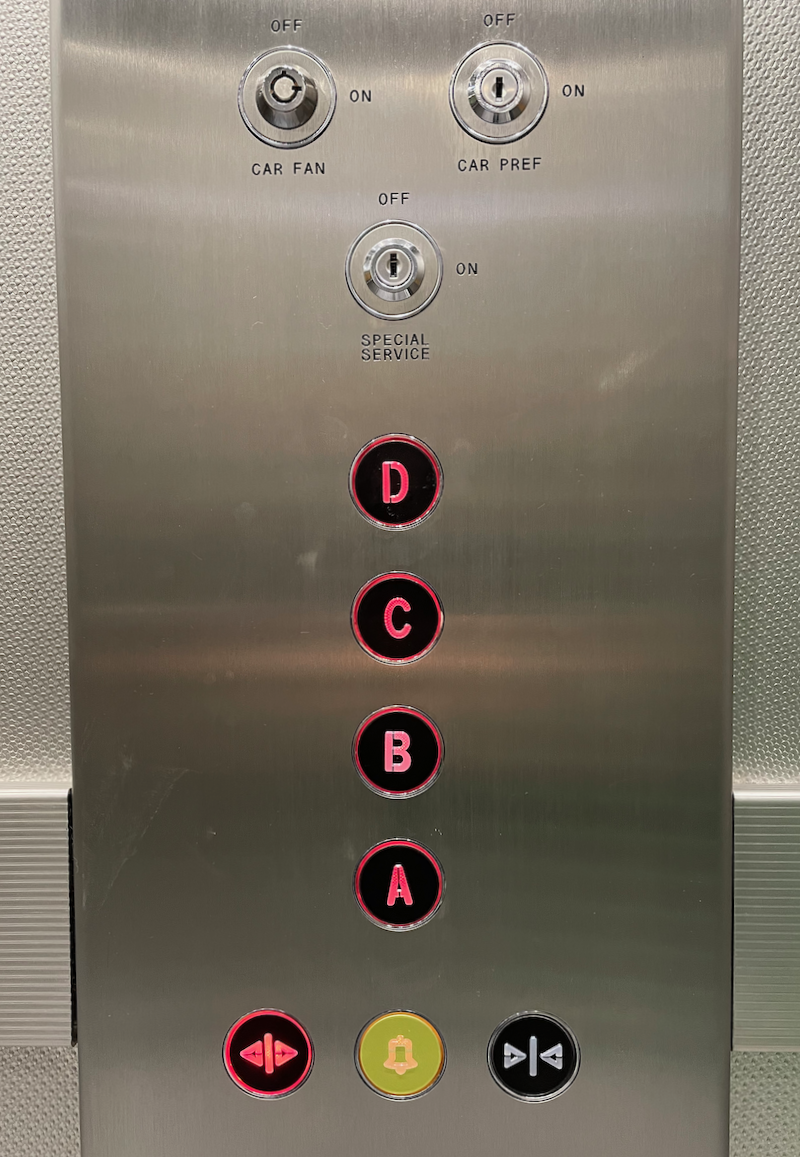
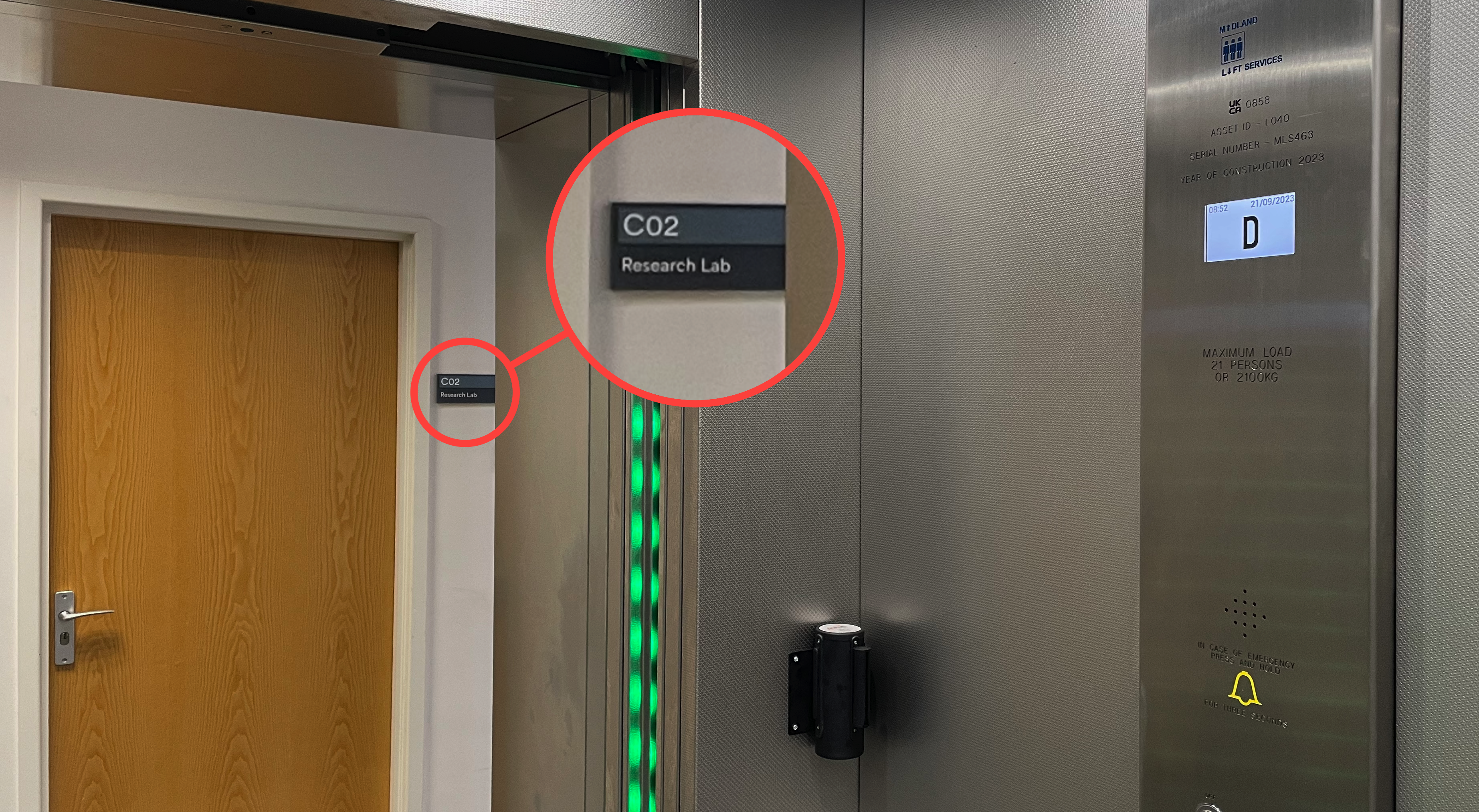
So, in the lift, the LG floor is the A floor, the A floor is the B floor, and so on. If you would like to go to, say, the C floor, you need to press D in the lift:
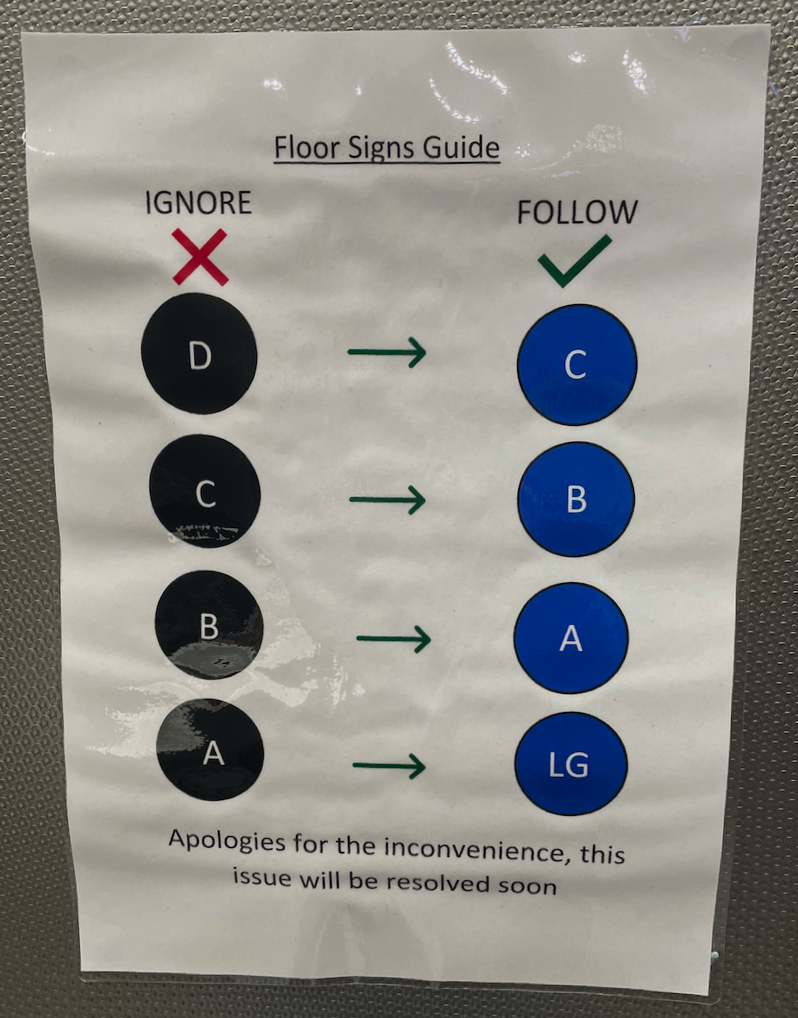
That this is confusing did not go unnoticed and someone decided to print a guide in an attempt to make things less confusing:
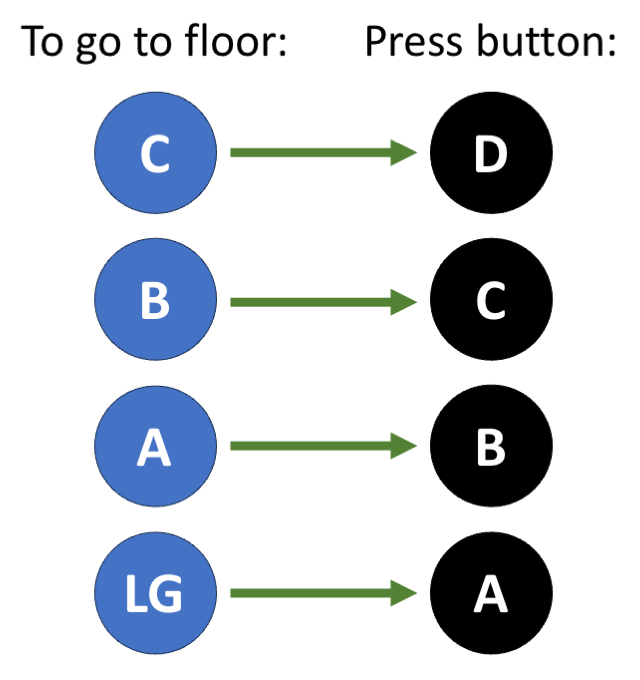
Here is my suggestion. I would argue that you can’t really “ignore” the existing buttons as the design above suggests. In my view, a sign like this would have been clearer:
22.2 The ESLC floor plan map
Then again, what the lift sign did get right is the spatial relationship of the floors. For example, Floor C is located above Floor B, and this spatial relationship is reflected on the sign. Makes intuitive sense, right? Because of this, one should think that this principle is adhered to everywhere. Well, not in our ESLC building. In this building, the A floor is the ground floor, the B floor is one floor up and the C floor is the top floor. On the building’s floor plan map, however, the A floor is on top and the C floor is at the bottom:
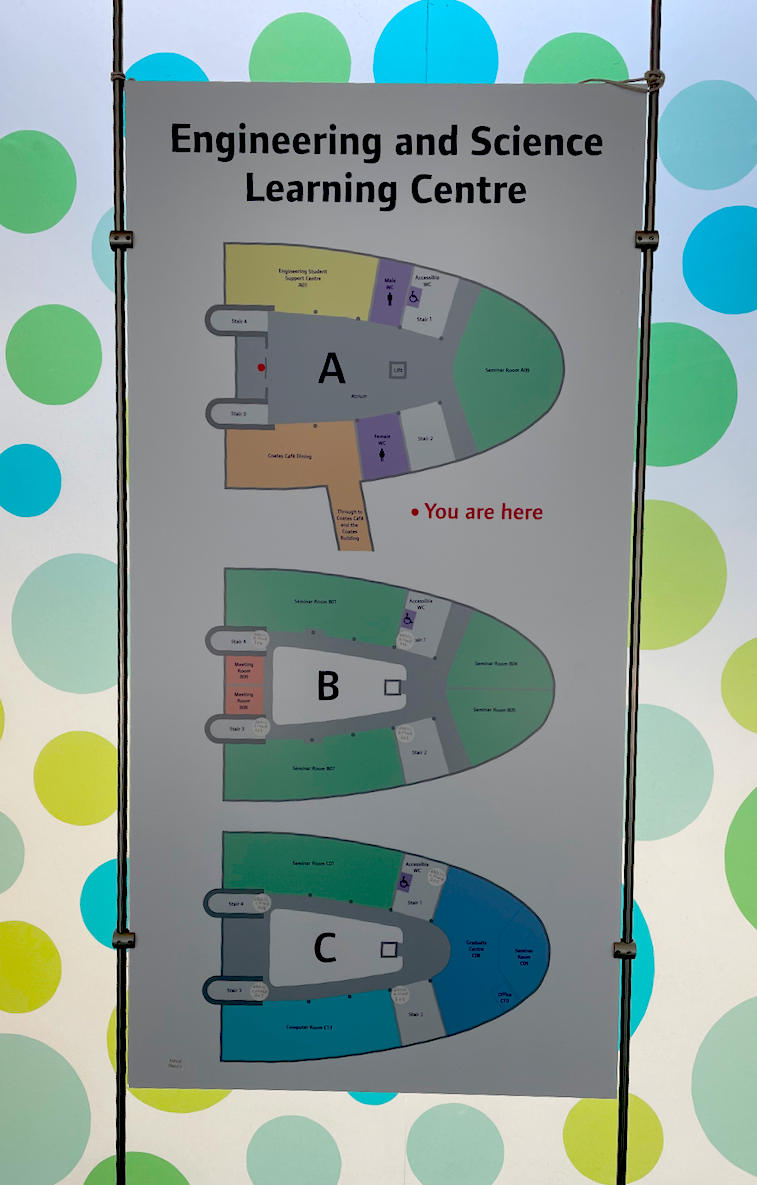
This creates a spatial incongruency that could have been avoided by having the floors on the map reflect the real-world physical arrangement of the floors.
Confirmation
Please confirm you have worked through this chapter by submitting the corresponding chapter completion form on Moodle.